

Turning Chaos into Organized Work Execution with Elokencia

Summary
Introduction
1-The Anatomy of Remote Chaos
2- Elokencia: From Noise to Structured Execution
3- Making Execution Measurable
4- Coaching Teams, Not Just Managing Tasks
5-Bottom Line
Introduction
Remote work has unlocked flexibility and global collaboration, but it has also introduced a new kind of organizational chaos. According to a 2024 study by Claryti, remote workers now attend an average of 25.6 meetings per week, an 80% increase over in-office counterparts, yet follow-up completion rates drop 34% in remote settings. Calendars are full. Meetings are frequent. Decisions are made. And yet, execution often feels fragmented.
Research from Jabra and the London School of Economics confirms that being fully visible, through video, doubles attention and engagement, while reduced visibility damages collaboration and slows outcomes. For many CEOs and team managers, the challenge is no longer about effort, teams are working hard, but about clarity, alignment, and follow-through. This is the reality of modern remote organizations: high activity, low structure, and too many moving parts.
Chaos doesn’t come from a lack of talent. It comes from a lack of visibility into how decisions are made and executed. Atlassian reports that 78% of professionals feel overloaded by too many meetings, which hampers productivity. This is precisely where Elokencia changes the game.
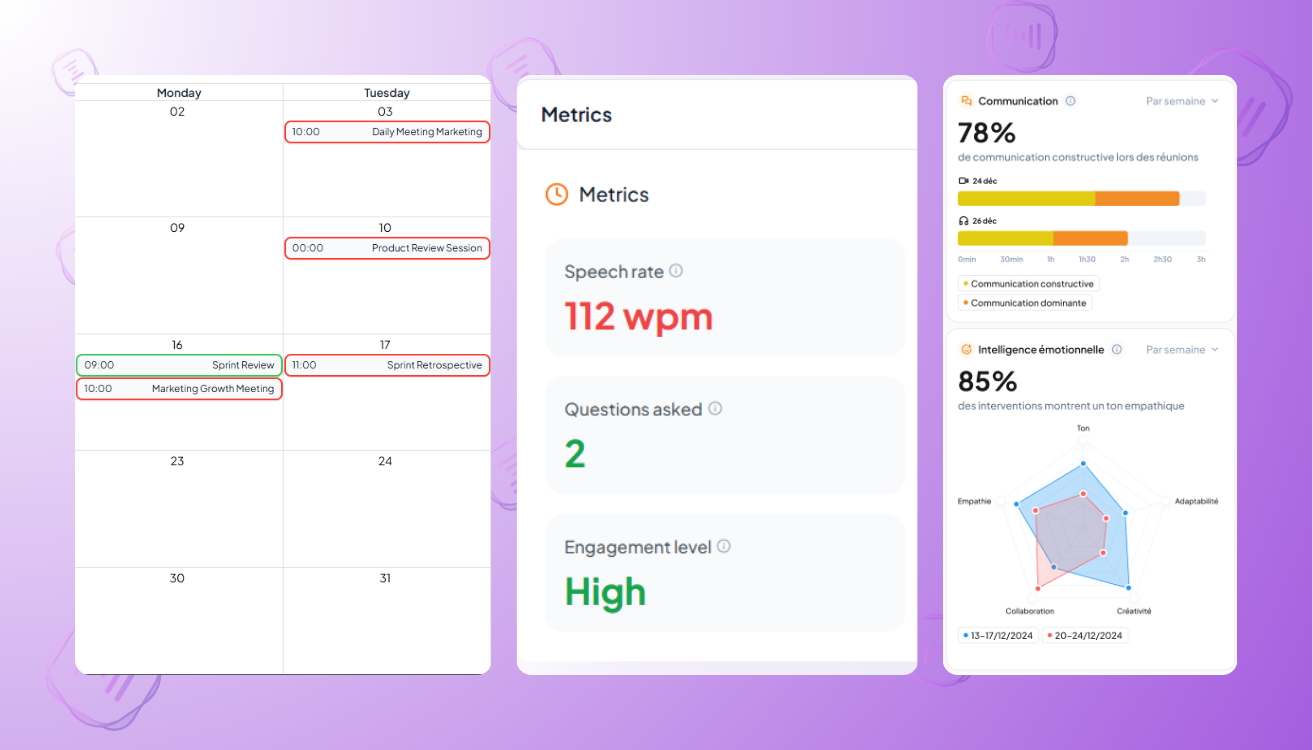
The Chaos behind Remote Work
1-The Anatomy of Remote Chaos
In distributed teams, chaos usually looks like this:
-
Meetings end without clear decisions
-
Action items get lost between conversations
-
Managers spend time chasing updates instead of leading
-
Teams feel busy, but progress feels slow
The root problem is simple: execution is disconnected from meetings. Discussions happen, but outcomes are not structured, tracked, or analyzed. Without insight into what’s really happening inside meetings, who contributes, how decisions are made, where friction appears, organizations operate reactively rather than intentionally.
2- Elokencia: From Noise to Structured Execution
Before and during meetings, Elokencia helps teams structure discussions with clear agendas and purpose. After meetings, the platform automatically:
-
Generates briefs, recaps and transcripts
-
Extracts tasks, responsibilities, and decisions
-
Produces structured reports ready for follow‑up
This ensures that execution doesn’t rely on memory or manual notes, it becomes systematic.
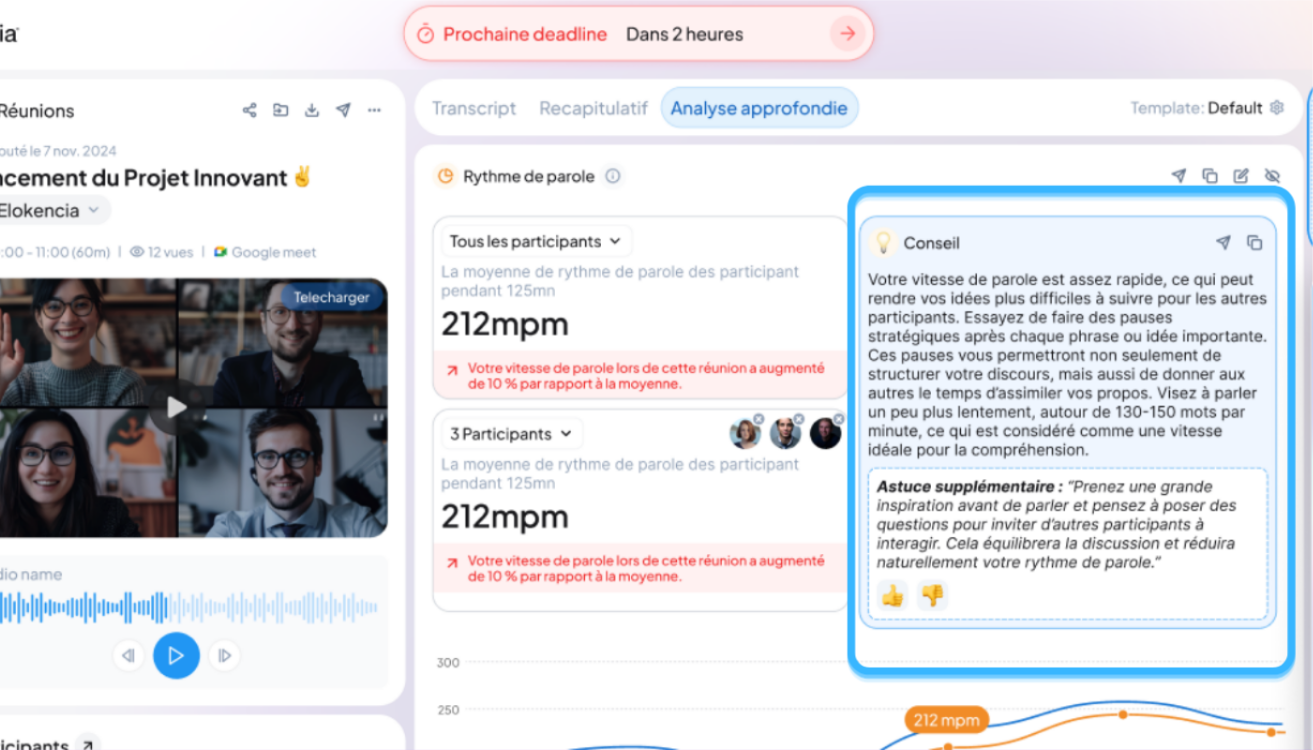
Elokencia's Platform
3-Making Execution Measurable
What truly sets Elokencia apart is its ability to analyze meetings beyond words.
The platform provides actionable metrics on:
-
Productivity and time management
-
Engagement and participation
-
Behavioral dynamics
-
Emotional signals within teams
Productivity and time management Engagement and participation Behavioral dynamics Emotional signals within teams
-
Recurrent tension or toxicity signals
-
Behavioral patterns across teams
-
Levels of collective efficiency
-
Dynamics that slow down or accelerate execution
For leadership, this means fewer assumptions and more clarity.
4- Coaching Teams, Not Just Managing Tasks
Execution is not only about processes, it’s about people. Elokencia helps organizations coach team members using real data from meetings. Instead of subjective feedback, managers gain objective insights into communication styles, participation levels, and collaboration patterns.
This creates a culture of continuous improvement, especially crucial in remote and hybrid environments where human signals are harder to read.
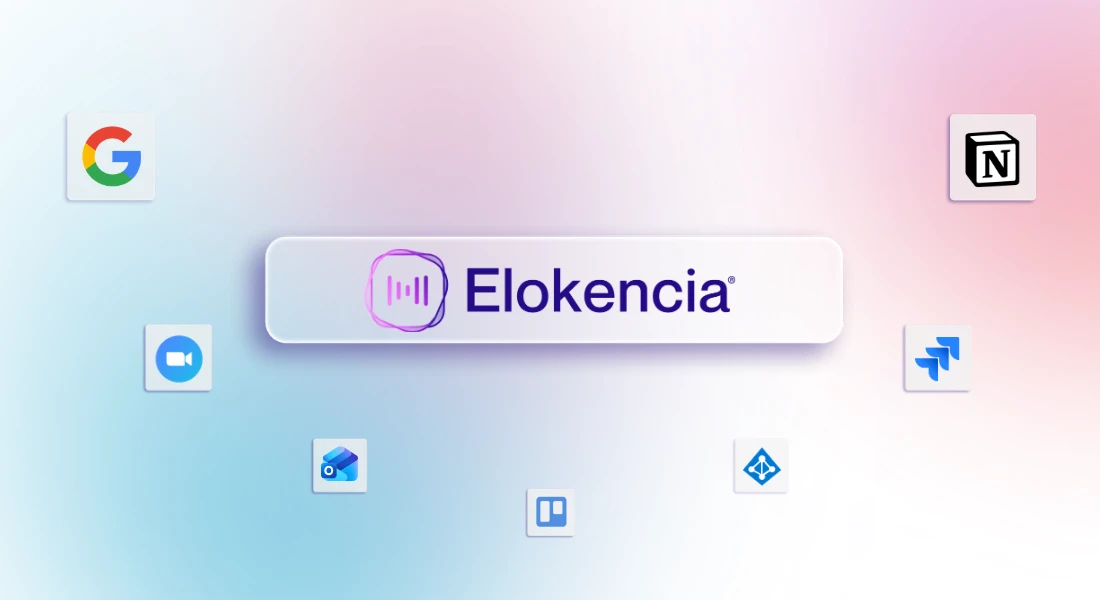
Elokencia's Advice section
Bottom line
Elokencia doesn’t eliminate meetings.
It transforms them into a reliable system for decision‑making and execution. For CEOs, founders, and managers leading remote teams, this means:
-
Clearer decisions
-
Stronger alignment
-
Less wasted time
-
More consistent execution
This is where chaos turns into organized work execution, and where Elokencia becomes a driver of real organizational change.
Elokencia's Integrations